Constant dog noise and barking can be frustrating for you and your neighbours. The good news is that with prevention, environmental changes, training, and the right boundaries, you can reduce barking and create a quieter, more peaceful outdoor space.
How to reduce dog noise: prevention is better than cure
If you are thinking of adding a furry friend to your family, it’s always good to plan for their arrival and prepare for all kinds of scenarios. An inevitable scenario is barking, so consider how it will affect your home and those around you. If you already have a four-legged friend at home, you will be aware of how loud a barking dog can be. If you already have a dog, assess triggers (people, other animals, passing traffic) and address them early.
Quick fact: some dog barks can be very loud: a Guinness World Record bark measured 113 dB. For context, a loud human shout is around 80 dB. Reducing what your dog can see and hear often reduces the amount of barking.
Create a yard that discourages barking
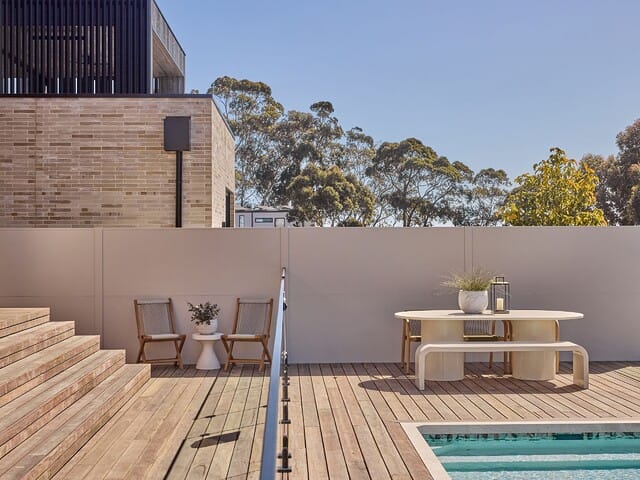
- Install a solid boundary: A privacy fence or solid privacy screen prevents visual triggers (posties, pedestrians, other dogs). Solid panels also block sound better than slatted fences. ModularWalls’ range of walls of fences are tested and rated by the National Acoustic Laboratory of Australia and reduce sound transmission by 20-25dB*.
- Raise fence height where allowable: Taller barriers reduce line-of-sight and can help reduce sound transmission.
- Add landscaping: Dense hedges, shrubs, and mass-planted greenery absorb and diffuse noise while improving privacy.
- Use privacy screens or panels: If a full fence isn’t possible, freestanding privacy screens or modular panels can block sightlines and dampen noise.
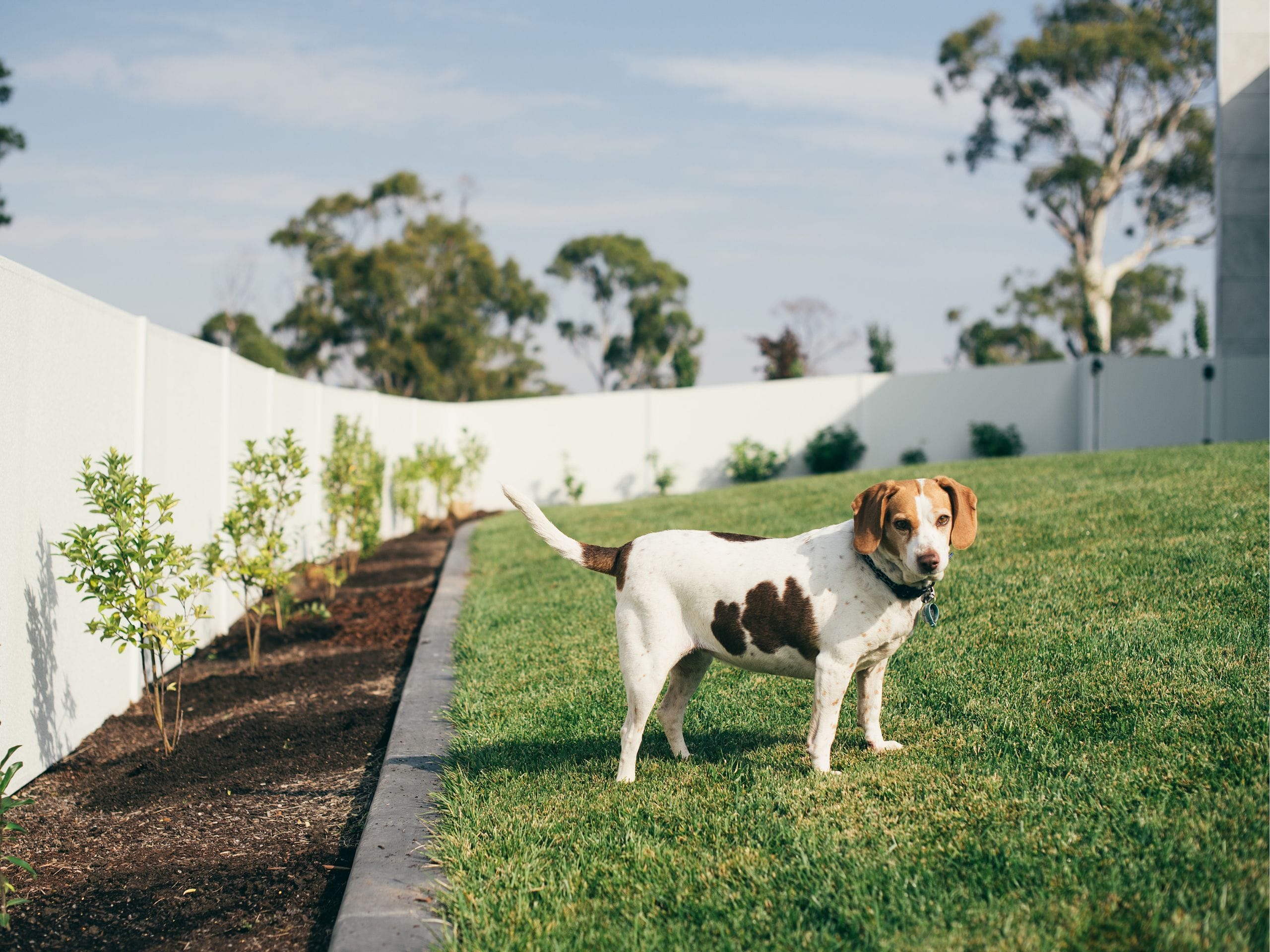
A ModularWalls boundary fence or wall can help reduce dog noise
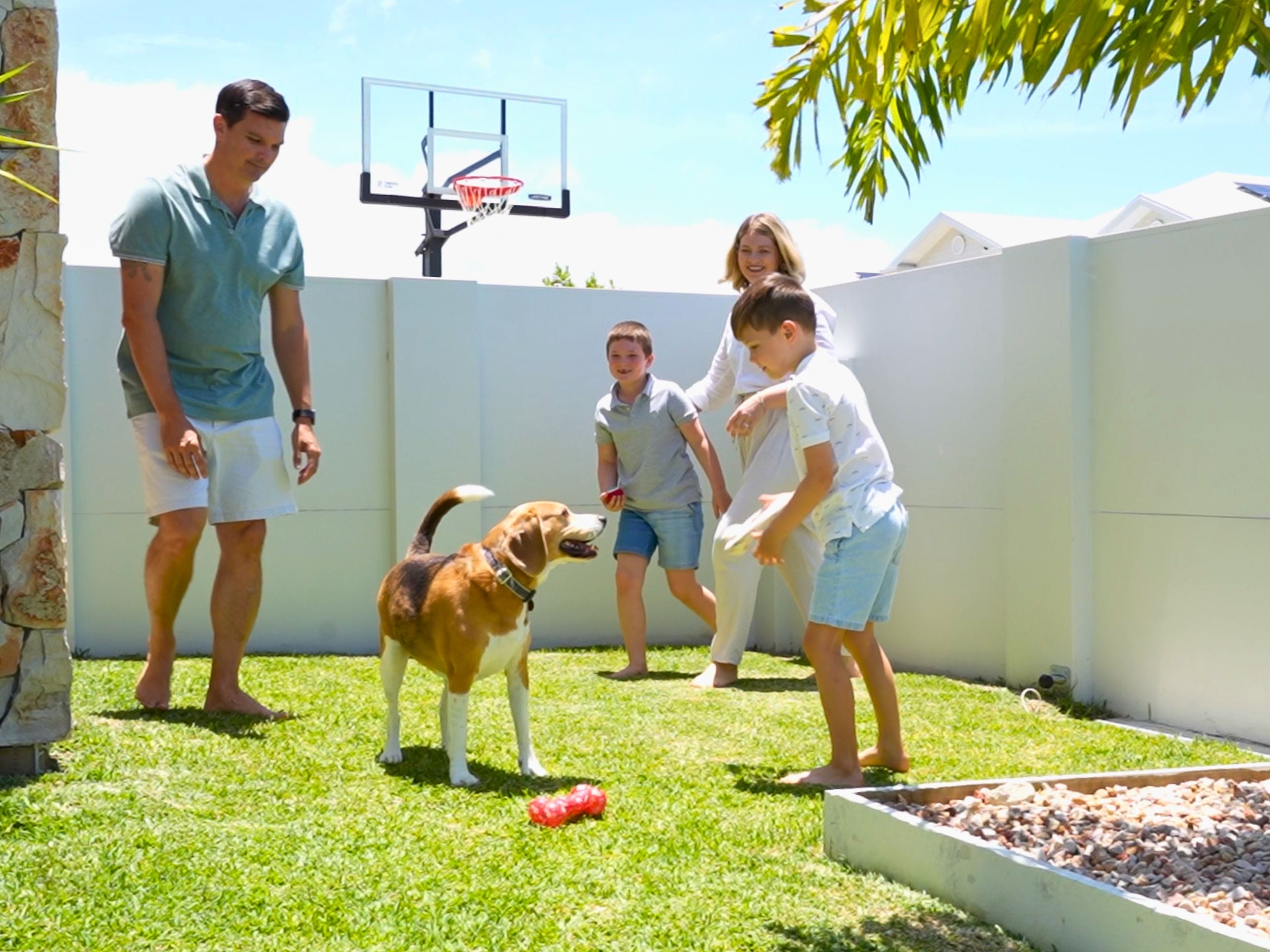
A ModularWalls fence and gate can help you in these situations, as the solid panels will prevent your dog from seeing through or under the fence. An added benefit of a fence without gaps like ModularWalls is that it will help reduce the barking sound travelling through the fence. The higher the fence, the better it will be at blocking the barking sounds entering your yard. As a result, you can expect to reduce the dog noise by up to 25 decibels.
Plus, a ModularWalls fence will keep your pets secure while you’re out. As there are no gaps like a wooden paling fence, there is no need to worry that your dog will get stuck between palings and injured while you’re not home.
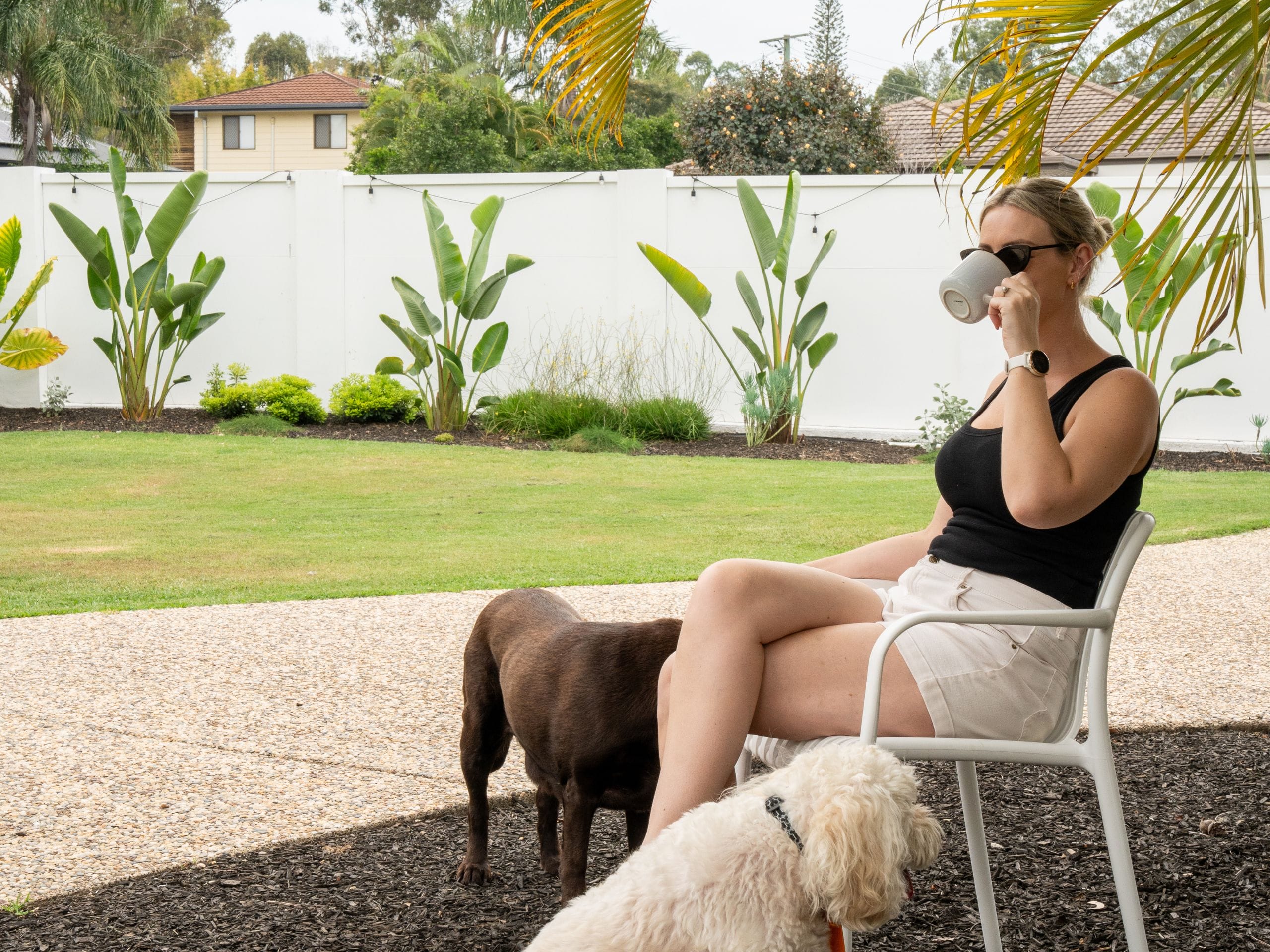
Add plants and landscaping to muffle dog noise and barking
Incorporating greenery complements your noise-reducing fence or wall. Hedges, shrubs and trees both absorb and deflect sound waves. Mix plant types (different leaf shapes and densities reduce different kinds of noise) to maximise sound dampening. In addition to absorbing sound, considered landscaping creates a peaceful atmosphere to distract from any disruptive dog noise!
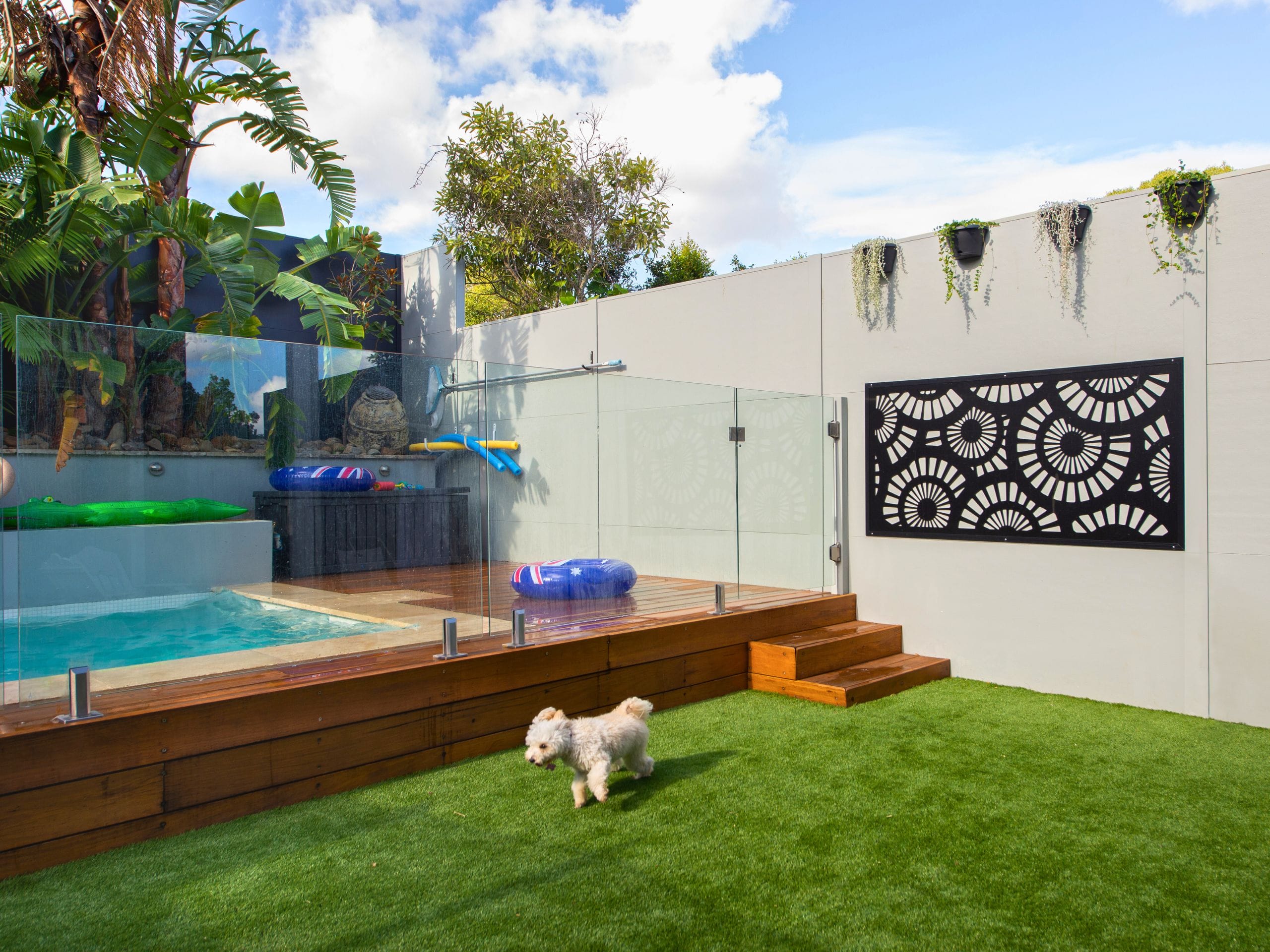
Address the root causes of dog noise
Before resorting to barriers, check your dog’s needs. Your dog may be well behaved when you are home, but what happens when you’re away for extended periods?
Ask yourself:
- Does my dog need a playmate to keep them company?
- Does my dog have enough food, water, and shelter?
- Is my dog getting enough exercise?
- Does my dog have enough toys and stimulation to prevent boredom?
- Has my dog received adequate behavioural training?
If you’re ticking all the boxes and your dog/s are still barking up the neighbourhood, then perhaps doggy day care is worth looking into for the days you’re at work.
Some practical training tips to try and reduce dog noise
- Reward quiet: Reinforce calm behaviour immediately with treats or praise.
- Teach a “quiet” command: Pair the command with positive reinforcement when the dog stops barking.
- Desensitise triggers: Gradually expose the dog to the trigger (e.g., passersby) at a distance and reward calm behaviour.
- Seek professional help: If barking persists, consult a certified dog trainer or behaviourist.
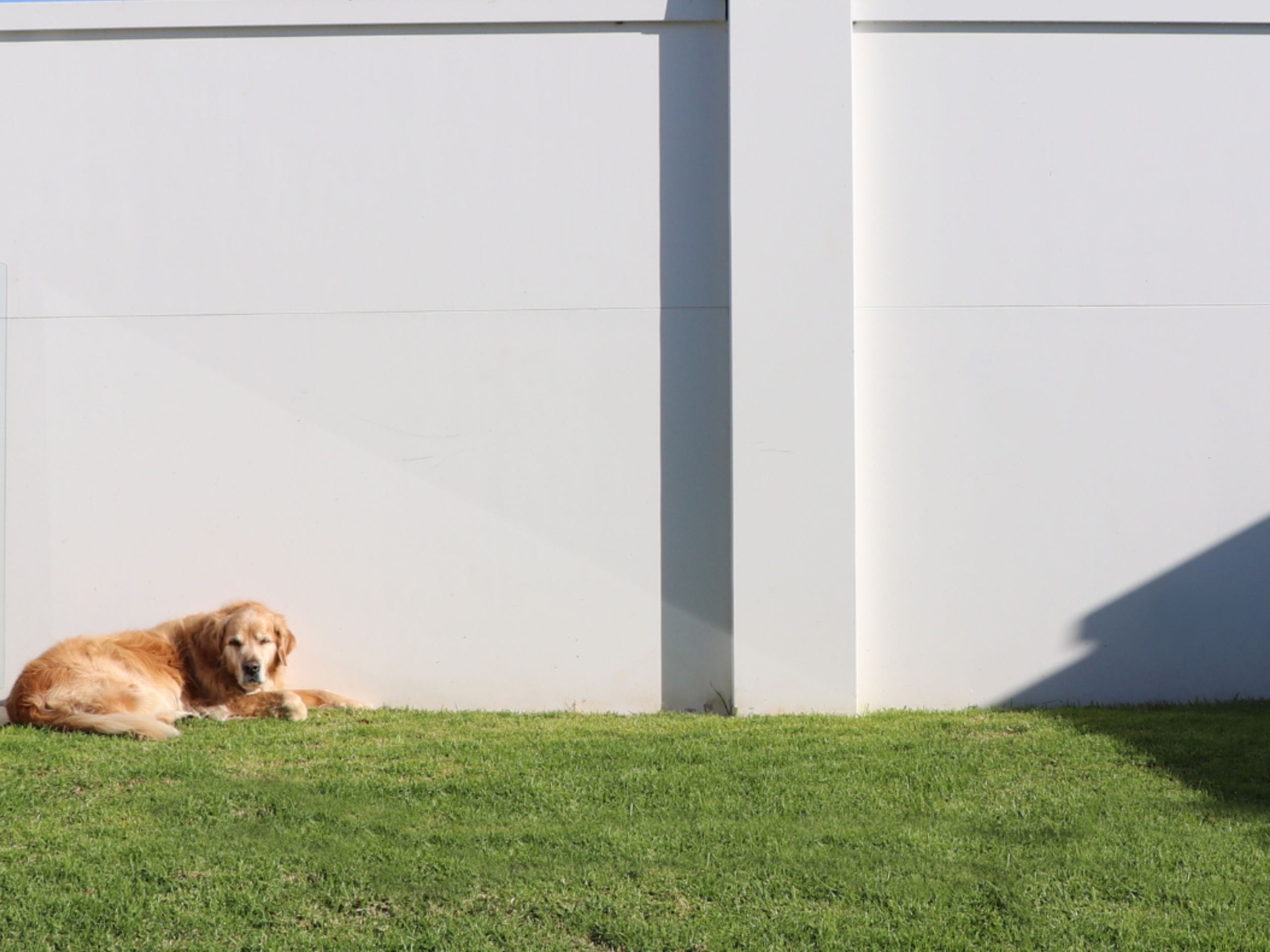
Reducing dog noise from a neighbour’s yard
The noise from a dog barking while playing in its backyard is expected. It’s when barking becomes excessive and repetitive that it becomes bothersome.
So, here are a few tips if you’re in this situation.
- Talk to the neighbour and get to know the dog.
Your neighbour may not be aware that there is a problem with excessive dog noise, so providing times of the day and how long the barking continues will help determine the reasons behind the barking. Ask the dog owner if you can give the dog a few treats and become friendly with the dog. Hopefully, once the dog is familiar with you, it won’t bark every time you are near.
- Block the dog’s view into your yard
As mentioned above, you can also look to block the dog’s view into your yard. If a new boundary fence is out of the question, a ModularWalls privacy screen in your yard could be an attractive option. A screen will also provide an additional barrier to reduce the barking sound.
The last straw with dog noise
If you live in an apartment complex or a strata-titled property and the barking persists even after you’ve tried all options, then write to your body corporate or real estate with specific dates and times when the barking occurs.
Hopefully, the dog owner will take feedback from the body corporate on board and take action to stop the dog from barking.
Reducing dog noise for a peaceful, quiet outdoor space
Hopefully, the dog noise will cease in time, and everyone – four-legged friends included can enjoy some peace and quiet. But remember, there is usually a cause for the barking, so always check on the dog’s welfare in the first instance. By doing so, you may soon have a new best friend.