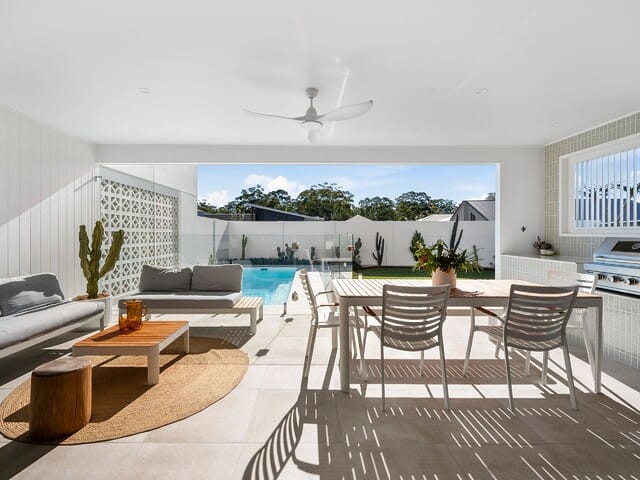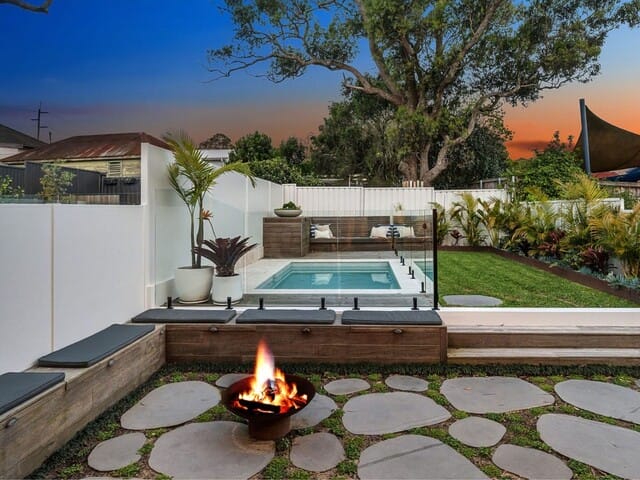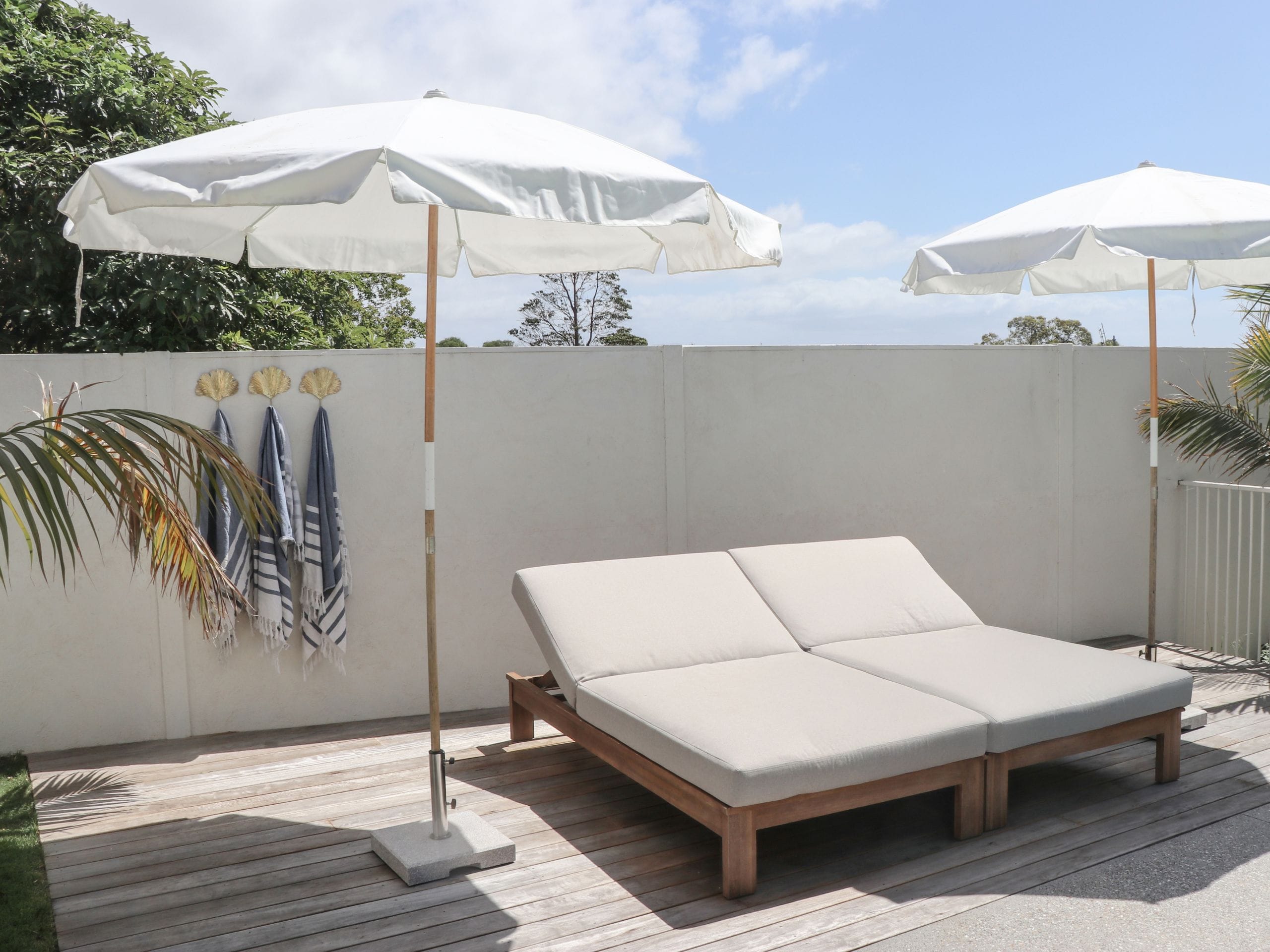
Such a tiny line, such a big question. If you’re planning a new modular fence or wall, you may be wondering what to do with the join lines between your panels.
The good news? You have options. For many homeowners, the standard panel joins simply become part of the finished wall. Others choose to make them an intentional design feature, soften their appearance with a textured finish or conceal them completely.
So, whether you love a crisp architectural detail or have your heart set on a more seamless look, let’s explore seven ways you can approach the join lines between your ModularWalls panels.
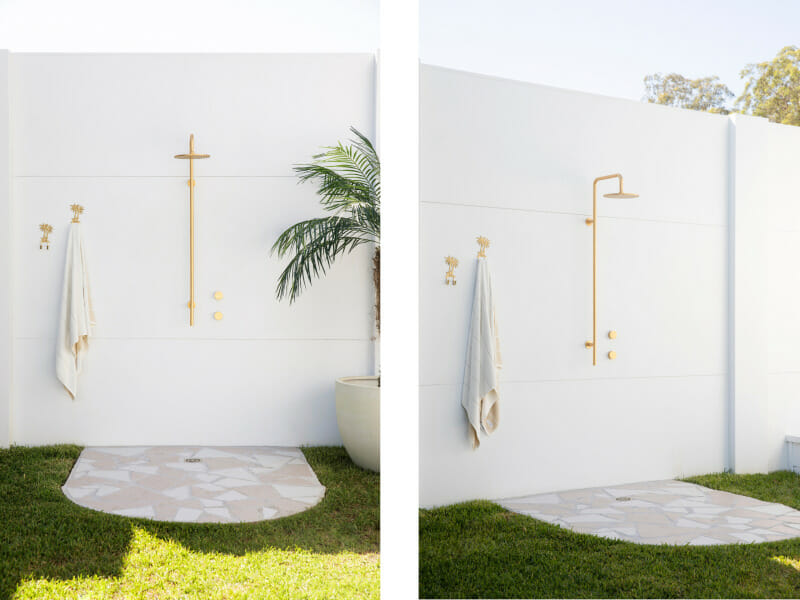
See how Three Birds Renovations incorporated ModularWalls into House 13.
1. Embrace the join lines between your fence panels
First things first: you don’t necessarily need to hide them. Once your ModularWalls fence is installed and painted, the joins between the fence panels can become a subtle part of the overall design. Depending on your chosen colour, landscaping and surrounding finishes, you may find they’re far less noticeable than you expected.
In fact, sometimes trying too hard to disguise the joins can draw more attention to them. Certain fillers and sealants can create a different surface texture that becomes more obvious once painted.
So, before deciding on a more involved finish, consider whether the standard panel joins work with your overall design. You might find that keeping things simple delivers exactly the look you’re after.

Explore Braden’s front fence transformation.
2. Break up the fence panels with battens or slats
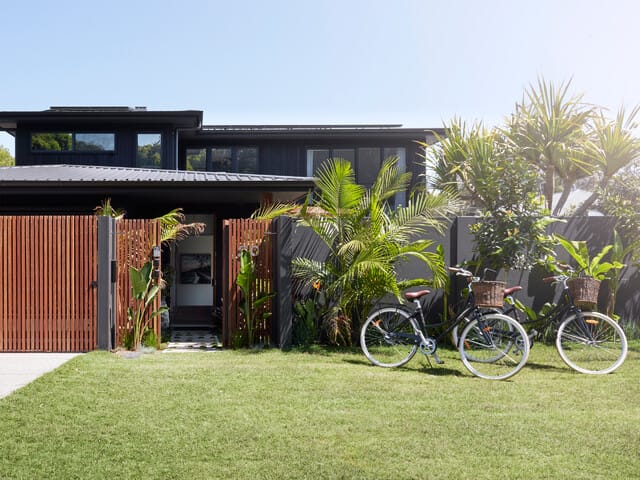
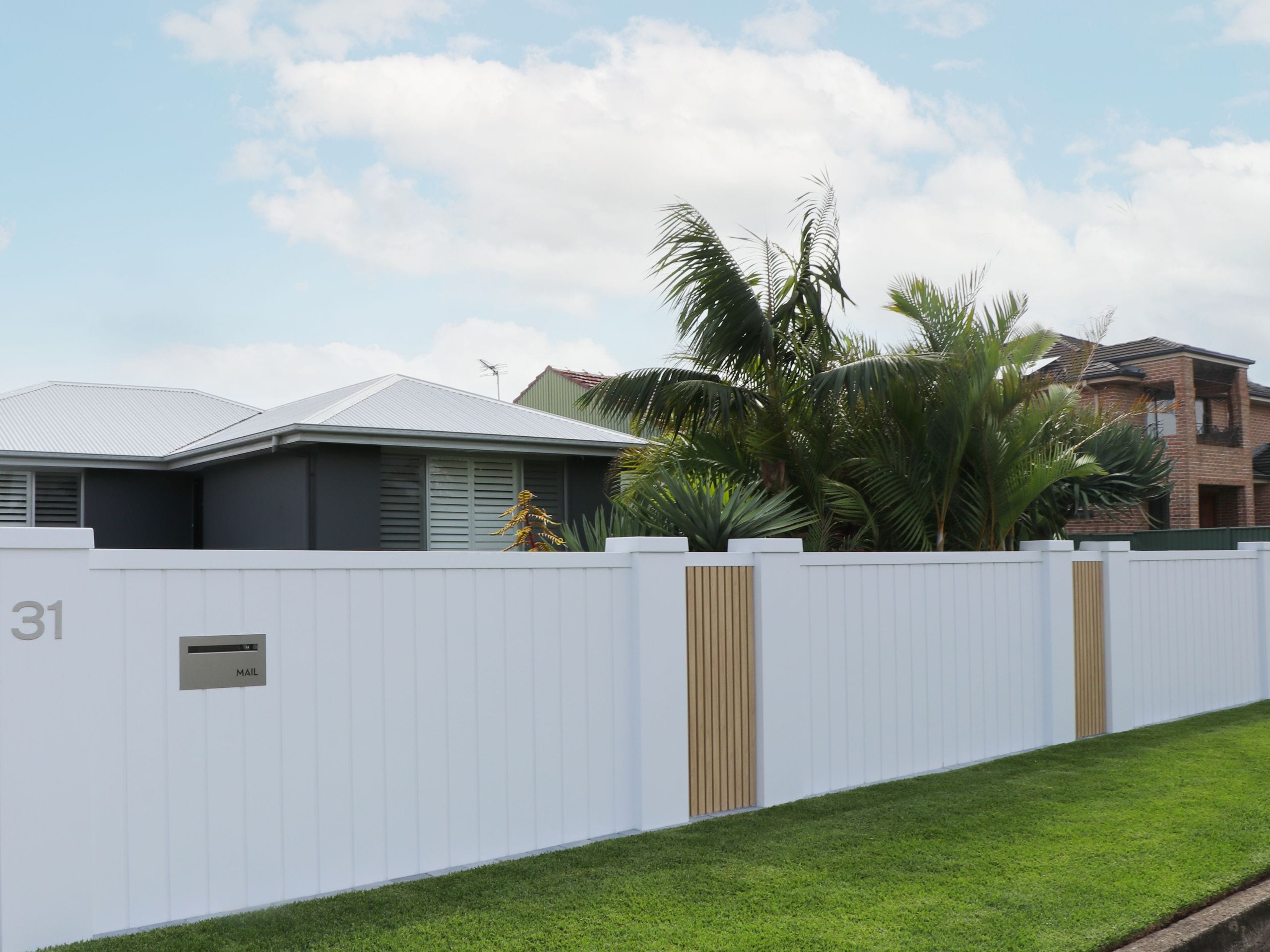
Another clever option is to work with the join lines rather than trying to conceal them. For Braden Uele’s front fence transformation, shorter modular fence panels were paired with custom-manufactured aluminium battens. The battens created additional height while adding architectural detail. Installed by ModularWalls recognised installer Prestige Fencing, the combination creates a strong first impression while providing the privacy and security the homeowners needed.
This approach also shows just how versatile ModularWalls can be. By combining fence panels with elements such as aluminium battens or slats, you can break up the visual weight of the wall and make the joins between panels less prominent.
It’s a popular choice for front fences, where you may want privacy without creating a completely solid boundary.
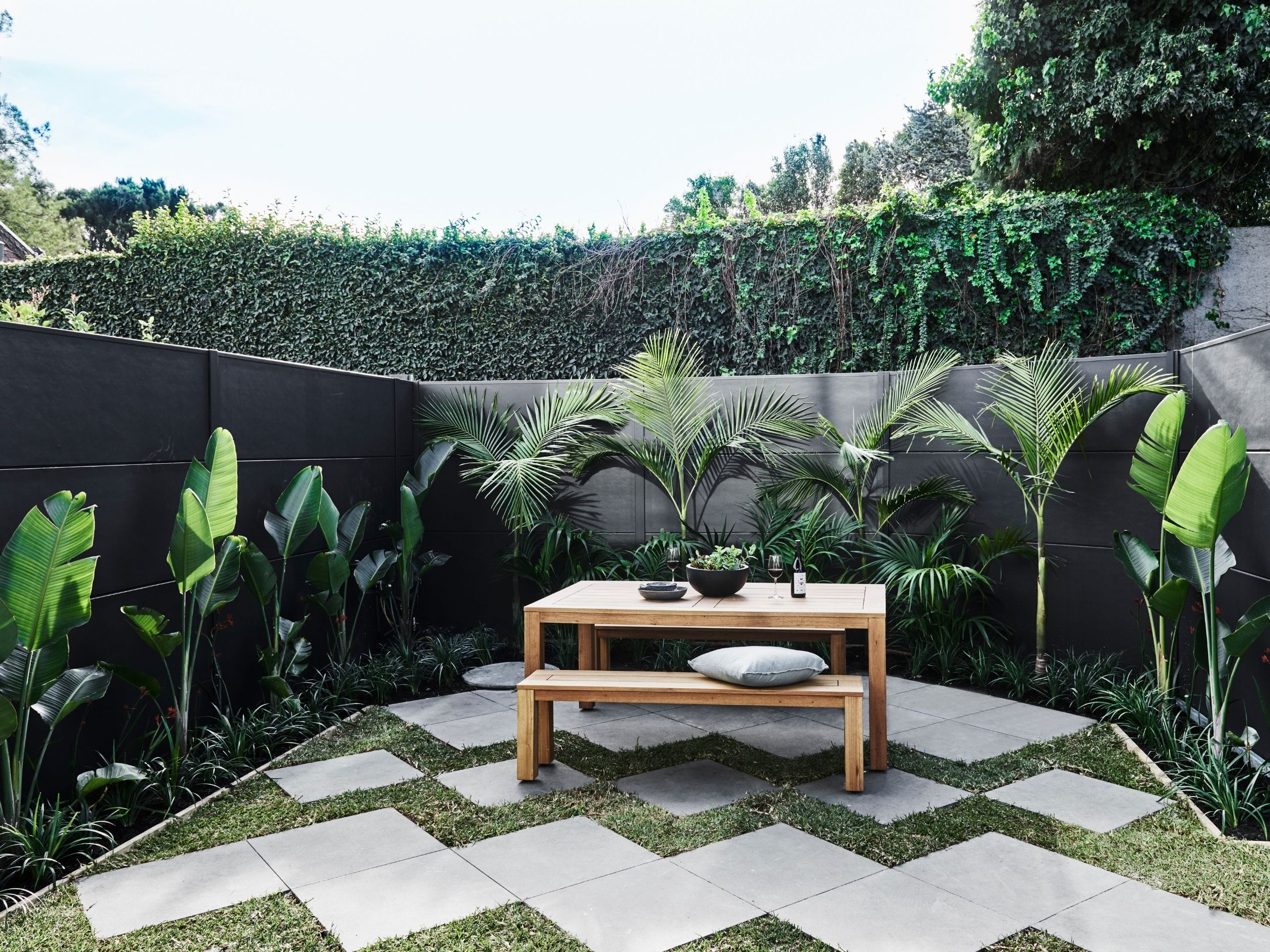
See Alisa and Lysandra’s SlimWall transformation.
3. Turn the join into a feature with an expressed joint
Sometimes, the easiest way to disguise a design detail is not to disguise it at all. Our expressed joint option turns the panel join into an intentional architectural feature. Rather than aiming for a completely seamless surface, the joins create a defined linear pattern across the wall.
The result is contemporary, considered and highly effective for architectural homes and feature walls.
Designers and renovators have used this approach to great effect, including The Block’s Alisa and Lysandra, proving that the humble panel join can become part of the design rather than something you need to hide.
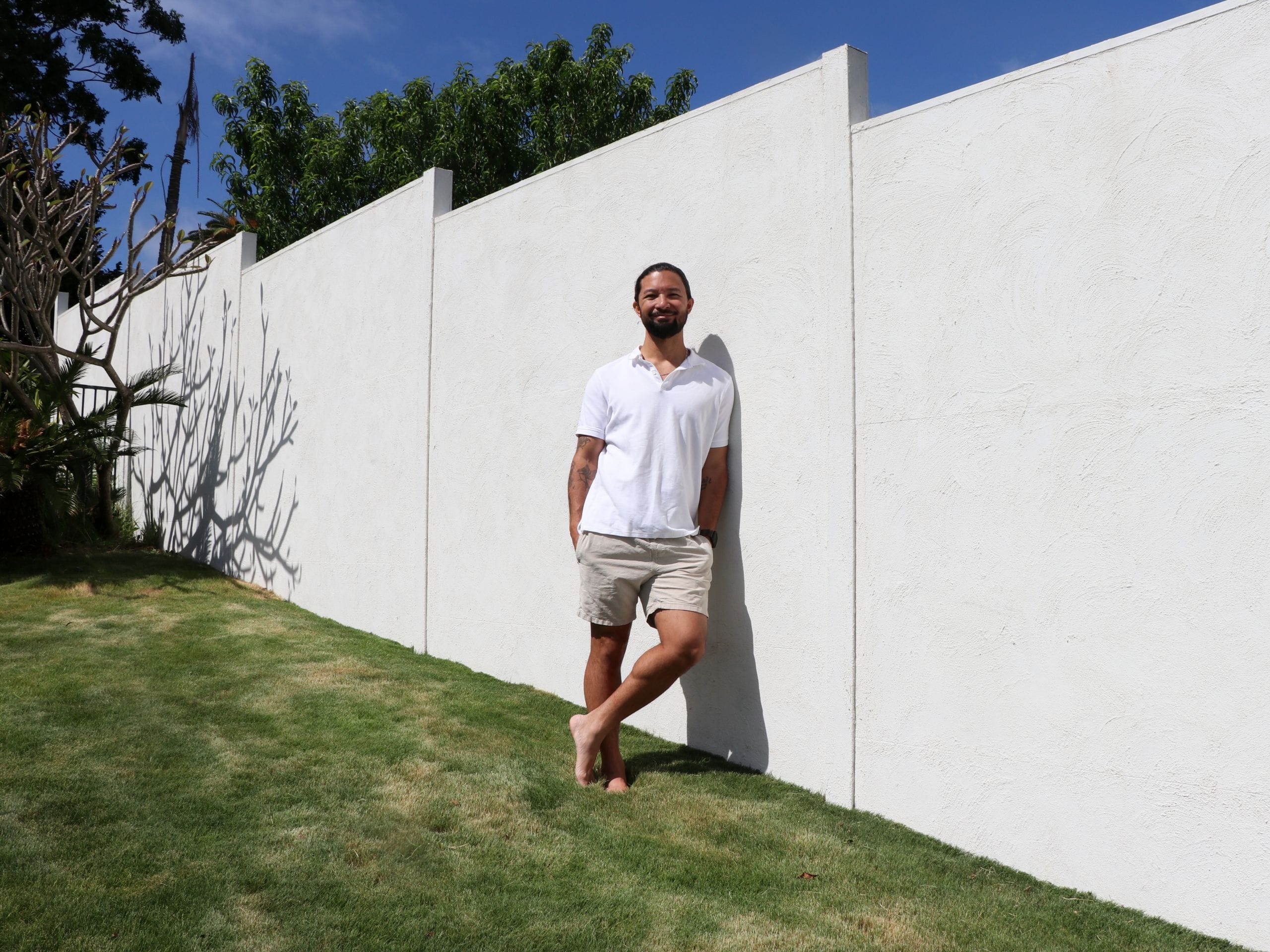
Take a closer look at Ben’s coastal transformation.
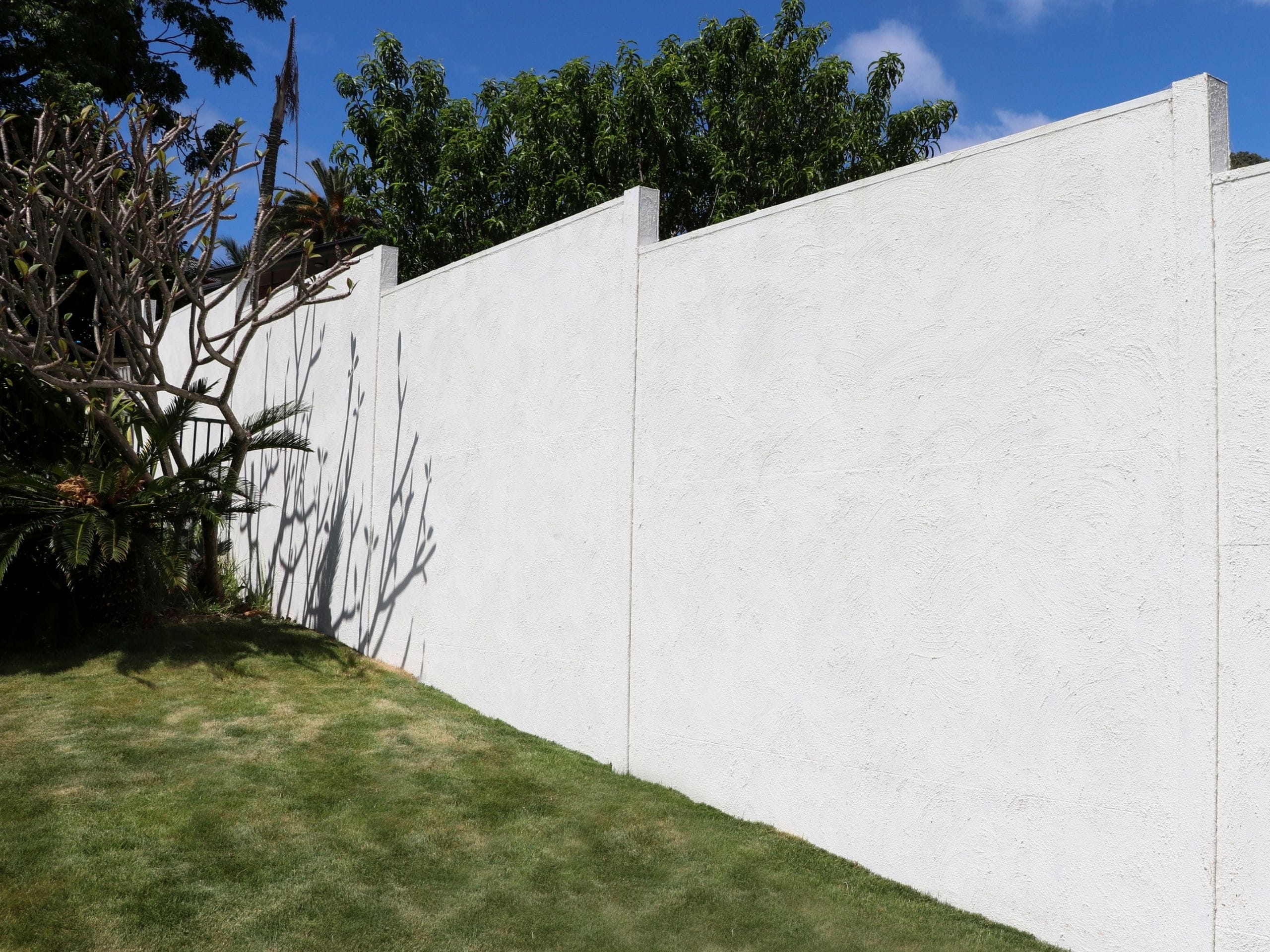
4. Soften the join lines with texture paint
If you like the simplicity of a painted modular fence but want to make the panel joins less noticeable, a textured paint finish can be a great middle ground. Rather than completely covering the join, texture can help soften the transition between fence panels and reduce the visual impact.
Homeowner Ben used Dulux Medium Texture in Natural White for his coastal-inspired ModularWalls project. While the joins weren’t completely concealed, the textured finish helped minimise their appearance and contributed to the relaxed, rendered look of the finished wall.
As Ben shared:
“We are so happy! The change is huge and exactly what we wanted. Almost every single person that has seen it, either in real life or on social media, has complimented us on how it looks. I’d definitely recommend ModularWalls.”

5. Create a seamless look with acrylic render
If a seamless finish is high on your wish list, acrylic render is one of the most effective options for concealing the joins between your modular fence panels. An acrylic render can be applied across the panels to create a smooth, continuous appearance similar to a traditional rendered masonry wall.
If choosing to render, there are a few important details to keep in mind.
- Render is applied to the fence panels rather than the posts.
- Posts and capping cannot accept render, and will need to be finished separately using a suitable exterior-grade paint or texture coating, such as Dulux Acratex Acrasand.
- For feature or box-style capping, the render can be applied up to the underside of the capping.
While acrylic render requires takes a little more consideration and time than a standard painted finish, it can create the high-end, seamless aesthetic many homeowners are looking for while retaining the unmistakable benefits of a ModularWalls system.
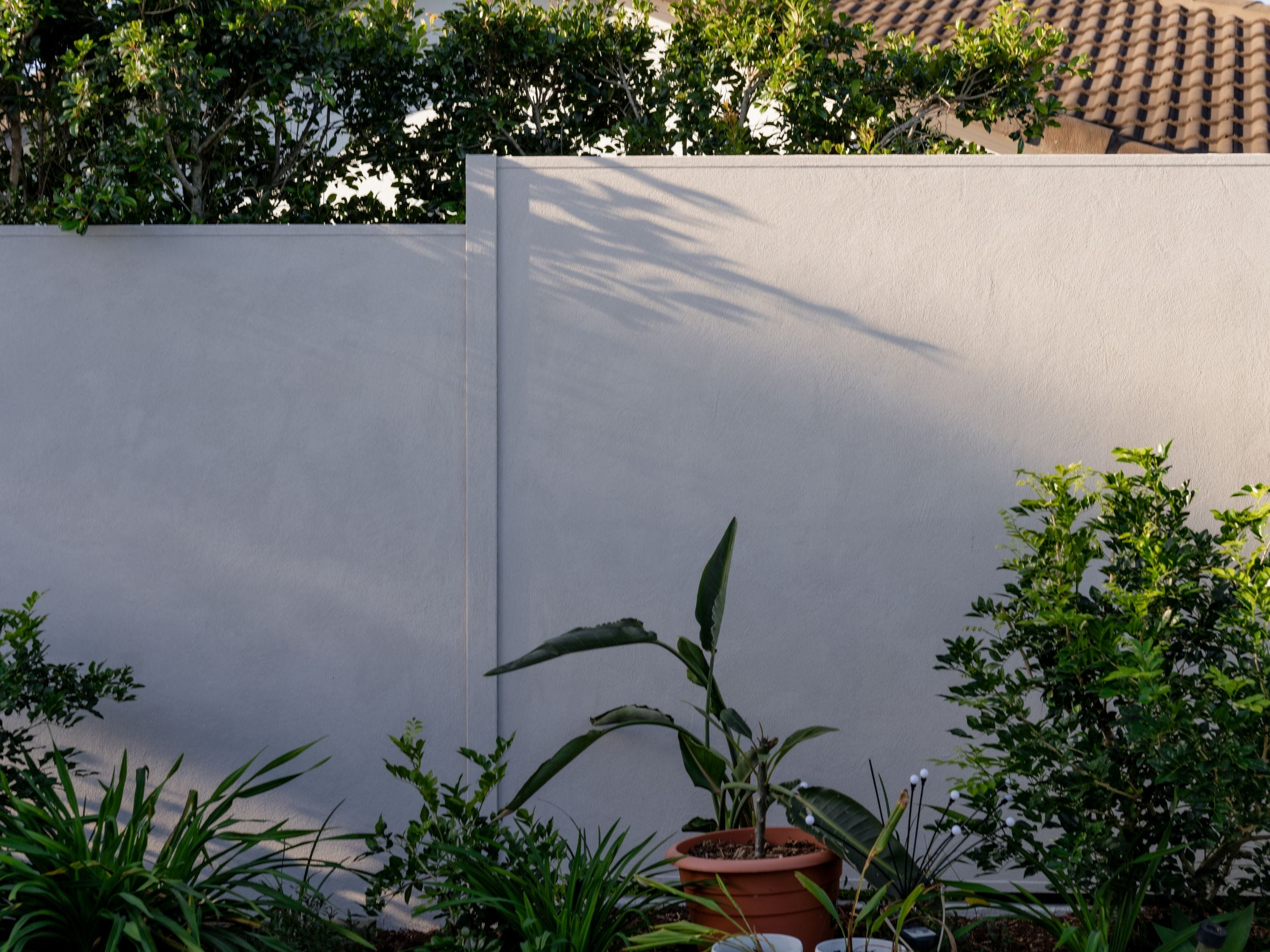
Discover Brendan and Nichole’s DIY modular fence
6. Consider joint compound (with care)
Experienced DIYers may also take inspiration from homeowners who have used exterior jointing techniques to minimise their modular fence panel joins.
Homeowners Brendan and Nichole patched the wall joints on their DIY pool fence using a joint compound before finishing the wall with Rockcote Toscani Painted Render in Taubmans Torte. Two coats were crosshatched onto the wall using a wide brush over a tinted Rockcote primer.
However, this custom technique can require a high level of skill to achieve a seamless joint like this.
If you’re considering this type of finish, we recommend speaking with ModularWalls about your project first, and engaging an experienced professional where appropriate.
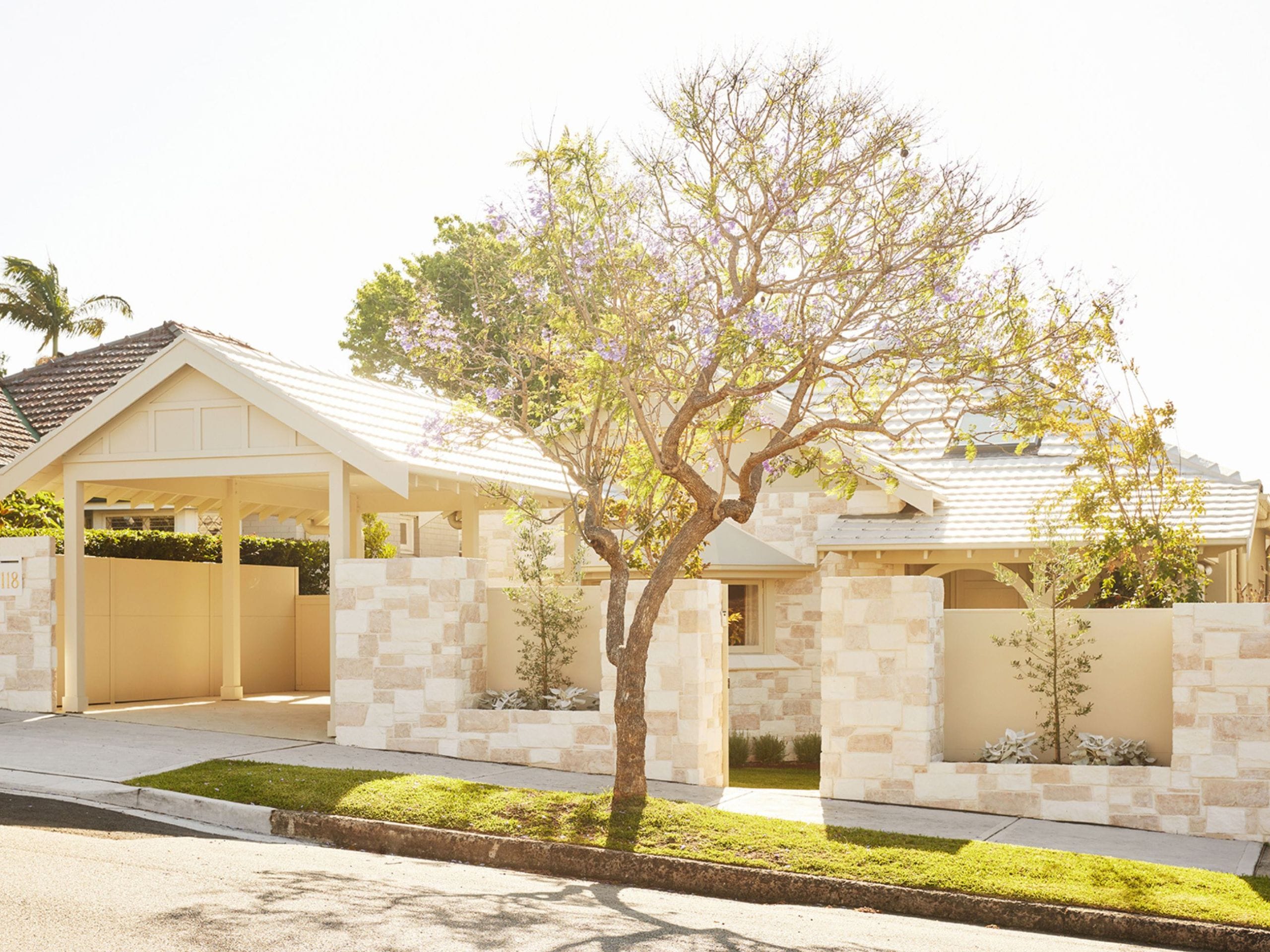
Explore the stone-clad ModularWalls design from Three Birds House 17.
7. Cover fence panels with tiles or lightweight cladding
Instead of trying to disguise the join lines, you could always cover them. Tiles and cladding can transform ModularWalls fence panels into striking feature walls.
This approach can be particularly effective for smaller areas such as privacy walls and front entrances, where a feature finish can make a big impact. Keep in mind that any cladding added to ModularWalls fence panels should be suitable for the chosen wall system. Before installing tiles, stone-look products or another type of cladding, speak with the friendly ModularWalls team to confirm the proposed finish is appropriate for your wall.
What shouldn’t you use to hide fence panel joins?
While there are plenty of ways to work with or conceal your fence panel joins, some seemingly simple fixes can actually make them more noticeable.
One common question is whether polyurethane sealants, such as Sikaflex or FLEXIT, can be used over the join. While these types of sealants are used as part of the ModularWalls installation process, we don’t recommend using them to conceal the visible panel join.
These sealants can leave a smoother or shinier surface than the surrounding panel, which may remain visible through the paint. Instead of hiding the join, you could end up highlighting it. Creating a smooth, consistent surface across multiple fence panels requires careful preparation and a high level of craftsmanship.
So, should you hide the joins between your fence panels?
There’s no single right answer…and that’s part of the beauty of designing with ModularWalls. You can leave the joins as a subtle part of your finished modular fence or wall, turn them into an architectural feature with expressed joints, soften them with texture paint or create a more seamless finish with acrylic render. For feature areas, lightweight tiles and cladding can take your design in another direction altogether.
Ready to bring your outdoor space to life? Explore the ModularWalls range to find a fencing style that suits your home or get started with an online Price Estimate to see what’s possible for your project.