Masonry fences have long been associated with luxury homes, architectural builds and premium street appeal. But while traditional masonry fencing certainly looks impressive, it often comes with a much higher price tag, a longer installation time, and more site preparation than homeowners may expect. The good news? There are several cost-effective masonry fence alternatives that can deliver a similar high-end look, without the complexity, delays or budget blowouts.
In this guide, we’ll break down the pros and cons of masonry fencing, then compare some of the most popular alternatives, including ModularWalls, aluminium slat fencing, timber fencing and PVC fencing.
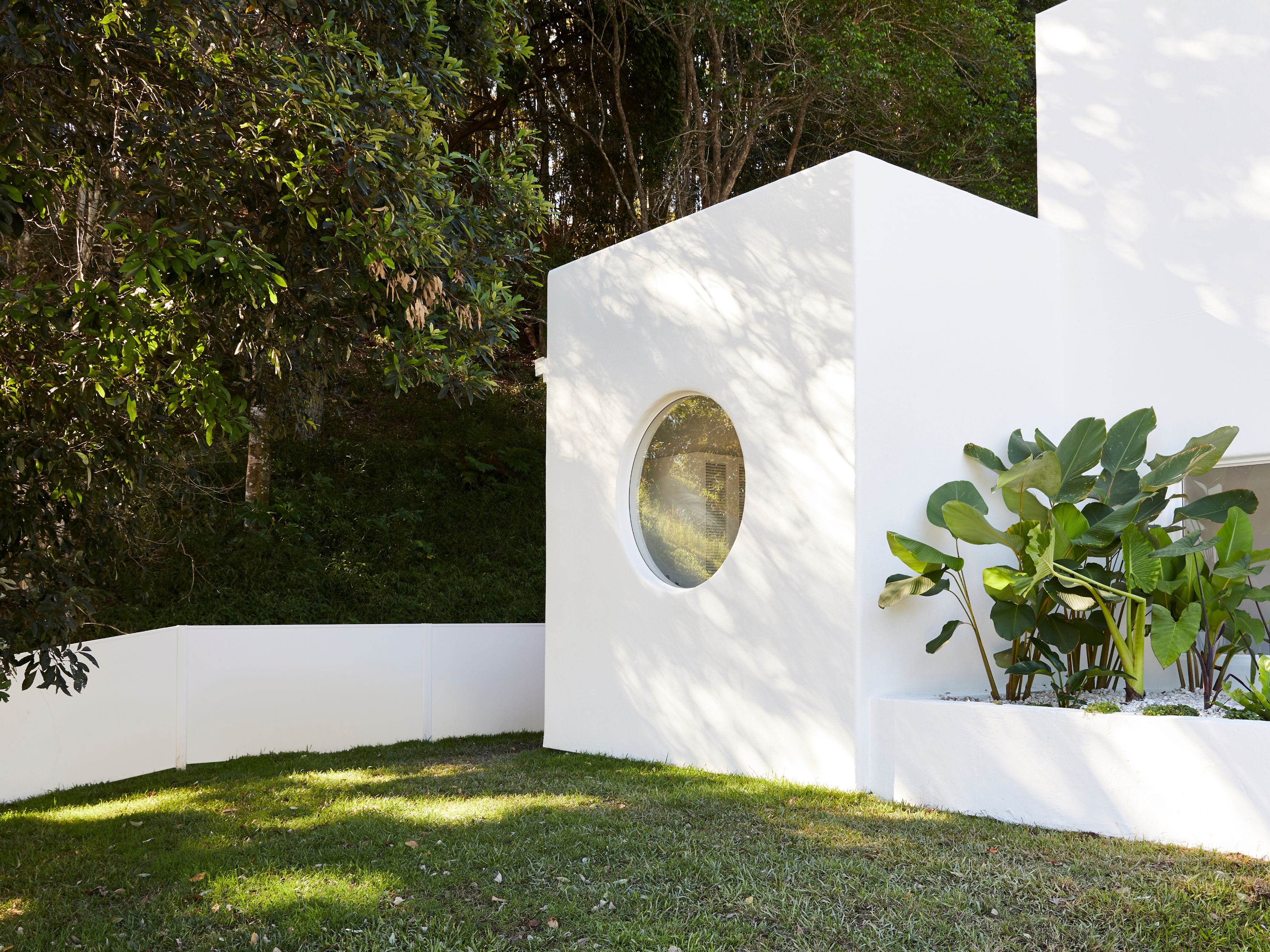
Pros and cons of masonry fences
Pros of masonry fences
- Robust, high-end aesthetics.
- Significant noise reduction due to their solid mass.
- Durable (when professionally constructed).
Cons of masonry fences
- Expensive materials and labour costs.
- Often require heavy machinery during installation, further increasing costs.
- Specialist trades are usually needed.
- May require council approval depending on height and location.
- Deep footings and excavation are commonly required.
- Underground services must be identified before excavation.
- Longer installation timelines compared to lightweight systems.
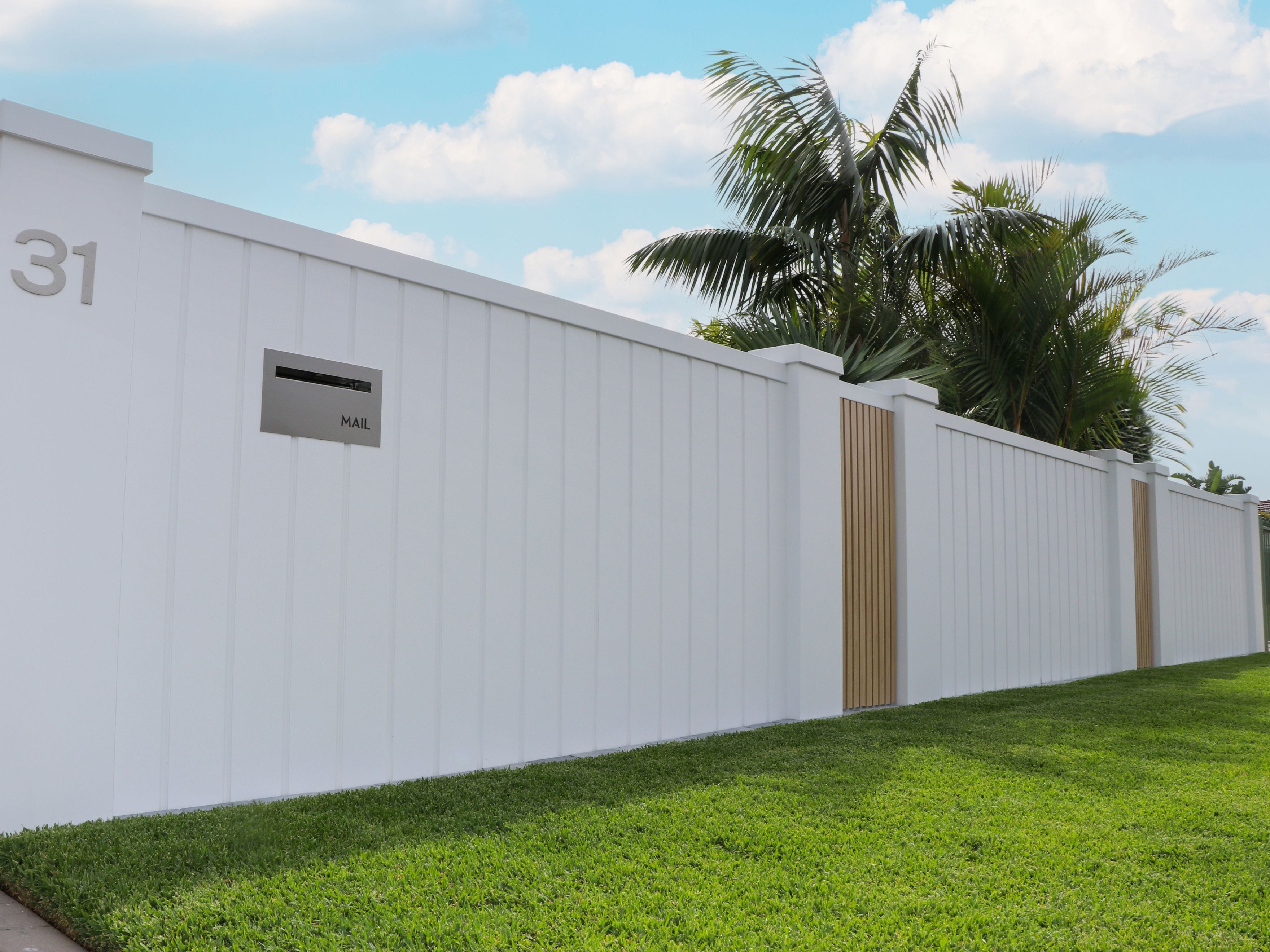
1. ModularWalls: the alternative to masonry fencing
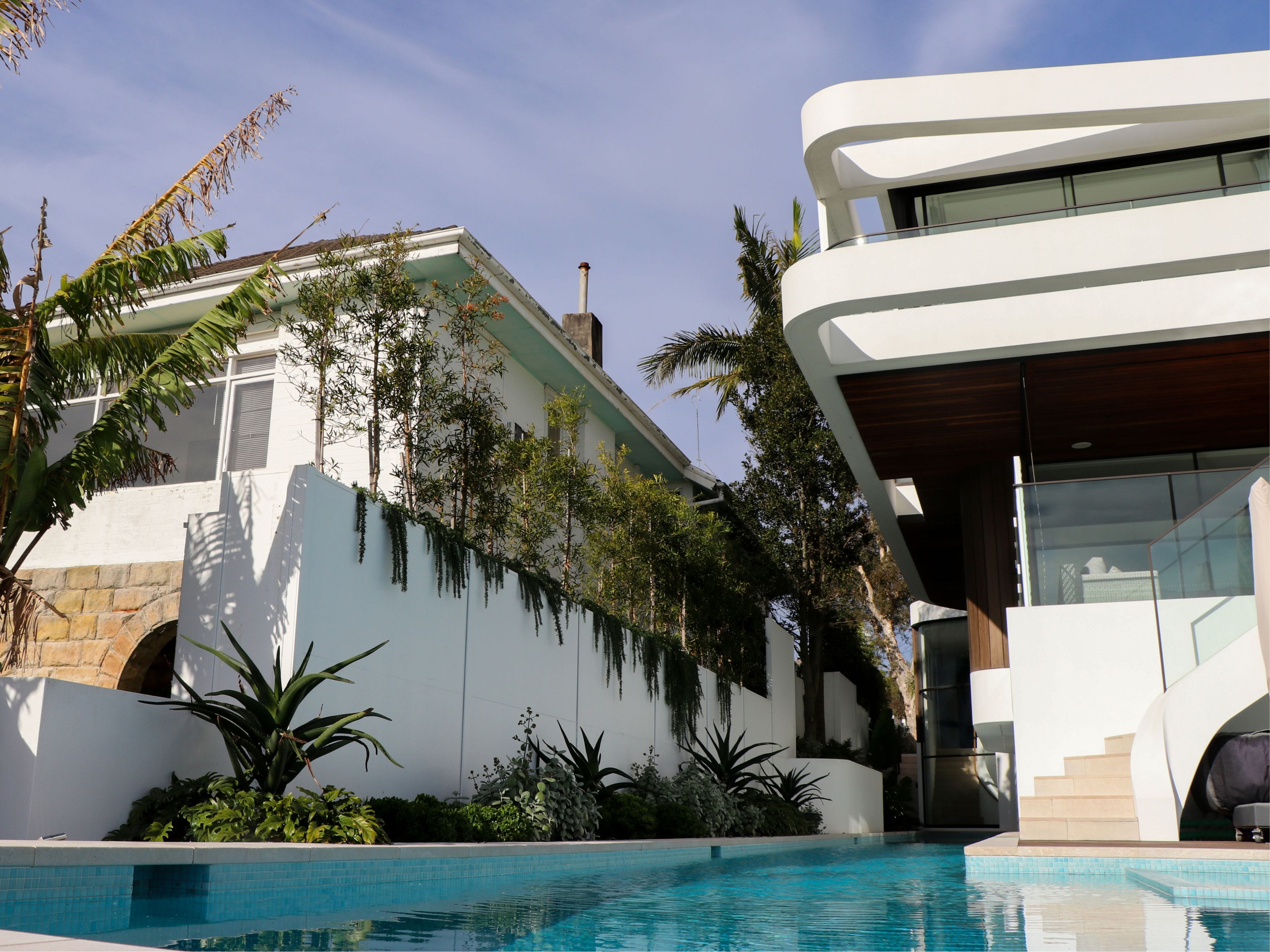
For homeowners seeking the look and performance of a rendered masonry wall without the heavy construction, ModularWalls has become one of the most popular alternatives.
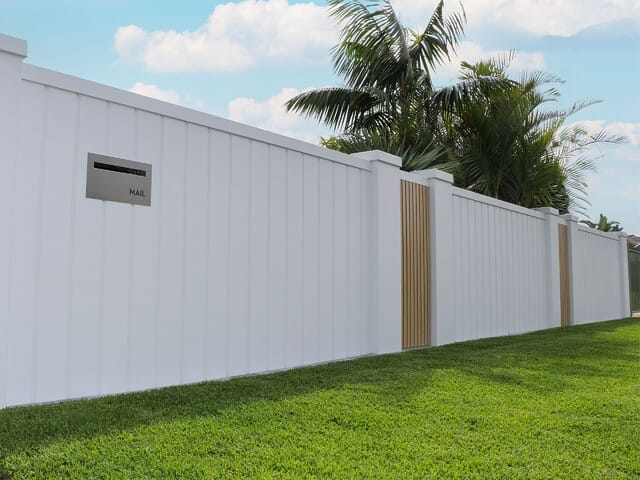
ModularWalls are engineered wall and fencing systems that combine noise reducing panels with durable structural posts to create a seamless, solid-wall appearance.
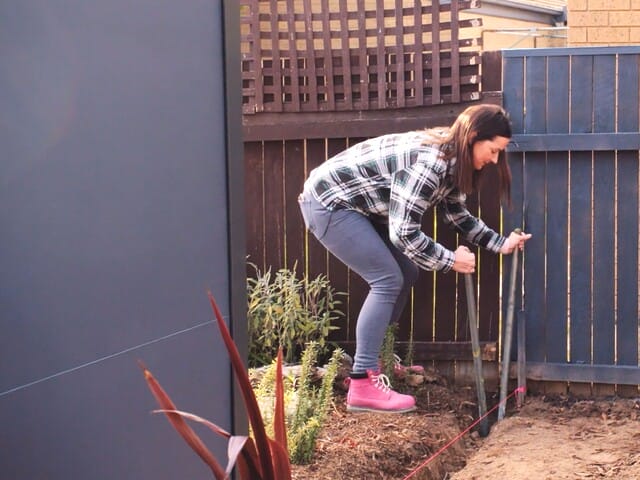
Unlike traditional masonry fencing, the system is designed for faster installation, less excavation and greater flexibility across residential projects. Instead of weeks of bricklaying, excavation and rendering, homeowners can achieve a similar architectural finish with a much simpler installation process.
Pros of ModularWalls
- Achieves a modern rendered wall appearance
- Excellent acoustic performance for noise reduction
- A low-maintenance solution, designed to withstand Australian conditions
- Engineered composite construction designed to resist warping, rot and termite damage
- Versatile solution, able to accommodate integrated lighting and security systems
- Faster installation, often completed in days instead of weeks
- No heavy machinery required in most residential applications
- Minimal excavation and shallower footings compared to masonry
- Versatile finish options including render, paint and textured coatings
- Suitable for sloping sites and challenging access areas
- Lower installation costs compared to full masonry construction
Cons of ModularWalls
- May not suit highly complex curved designs
- Premium systems can cost more than basic timber or metal fencing upfront
For many homeowners, ModularWalls strike the ideal balance between aesthetics, performance and practicality.
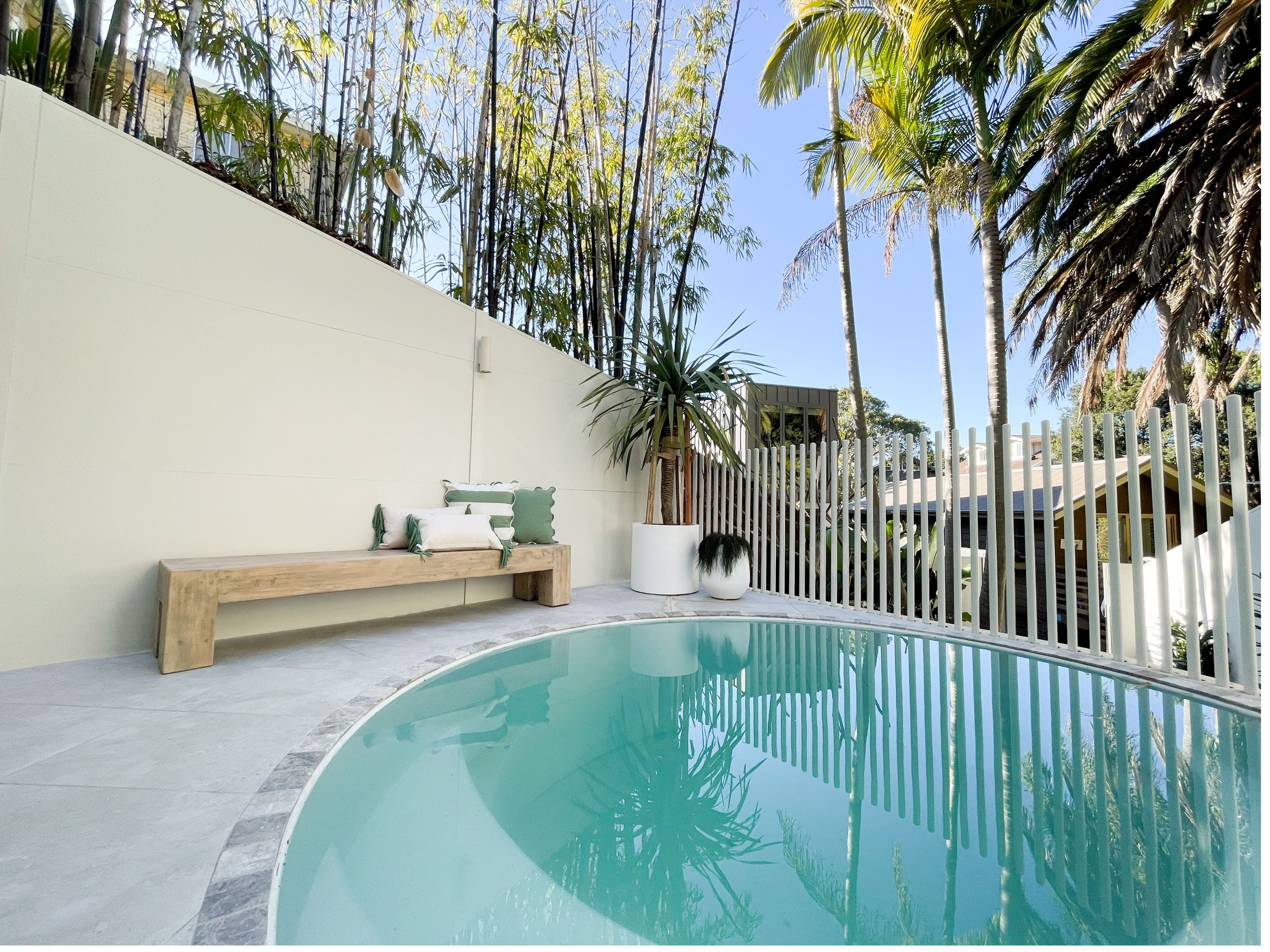
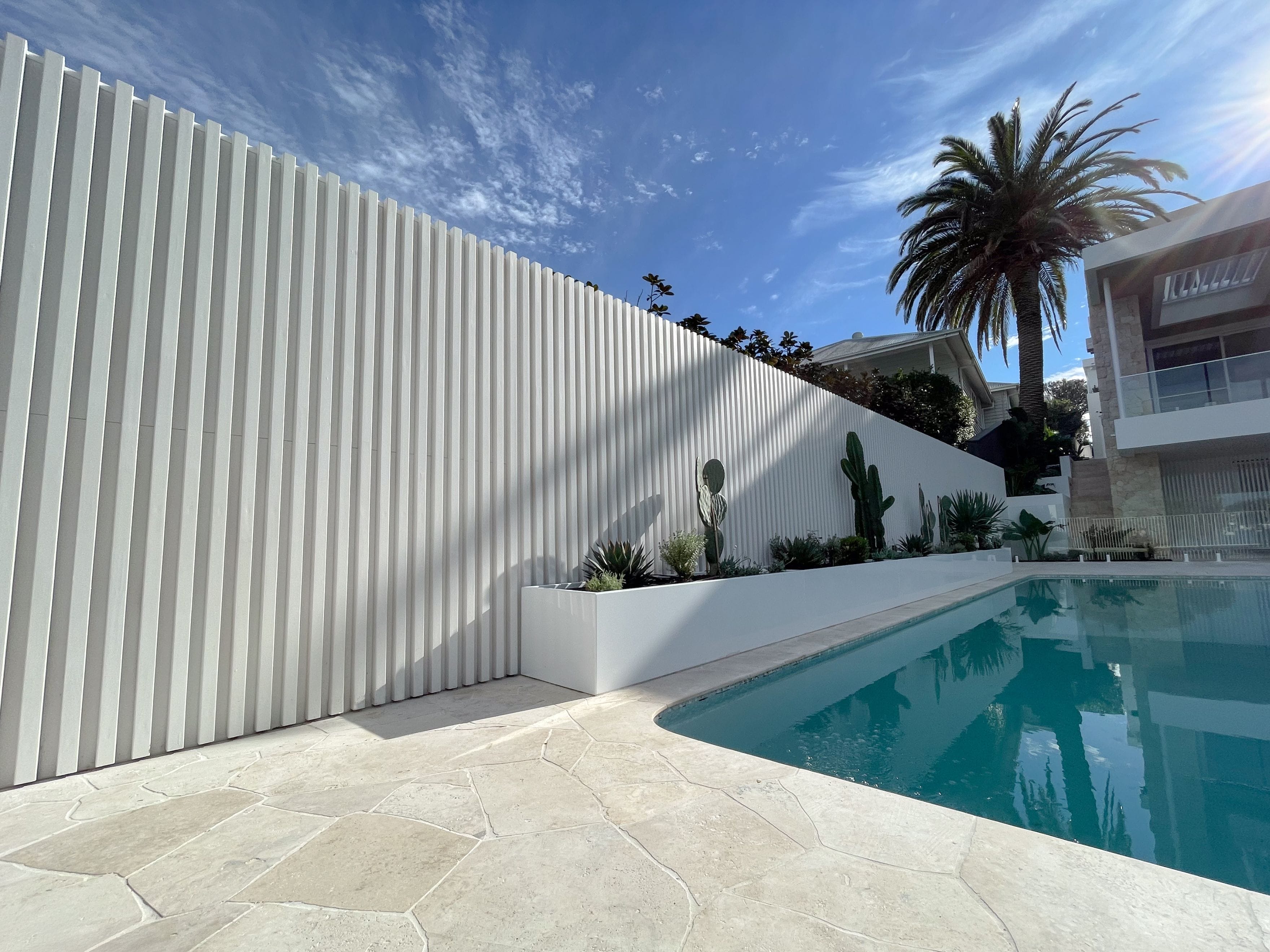
2. Modern masonry fence alternatives: aluminium slat or batten fencing
Aluminium slat fencing has become increasingly popular in modern Australian homes thanks to its clean lines and low-maintenance finish. Rather than creating a fully solid wall like masonry, aluminium slats provide a contemporary screening effect that works particularly well for front fencing, pool areas and modern landscaping.
Pros of aluminium slat fencing
- Modern architectural appearance
- Lightweight and corrosion-resistant
- Low maintenance compared to timber
- Good airflow and visibility options depending on slat spacing
Cons of aluminium slat fencing
- Minimal acoustic benefits
- Reduced privacy if slats are spaced apart
- May be expensive for premium powder-coated finishes
- Less solid and substantial appearance than masonry-style walls
- Dents and scratches may be visible over time
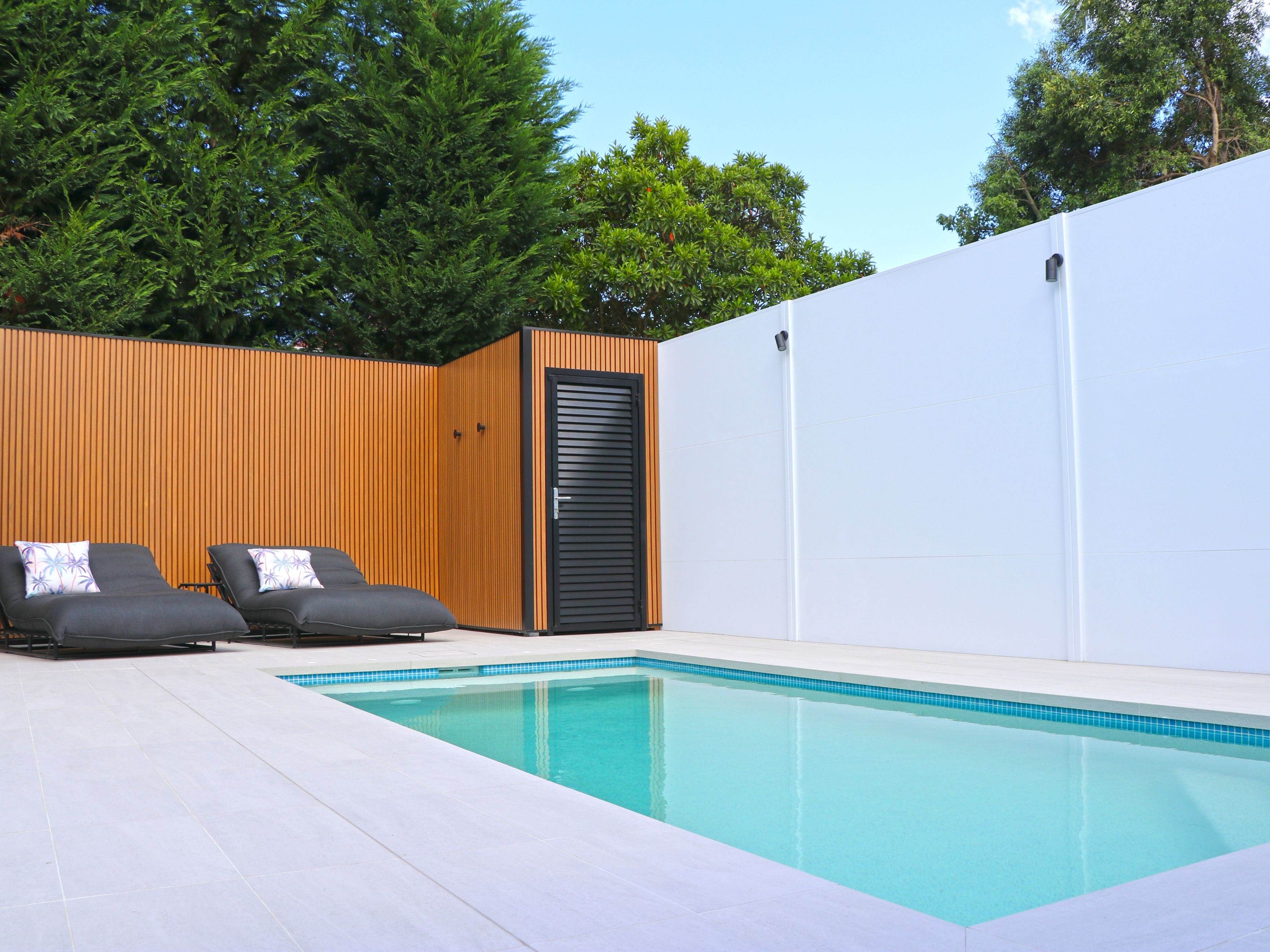
3. Timber fencing
Timber fencing remains one of Australia’s most widely used fencing solutions due to its affordability and natural appearance.
From classic paling fences to horizontal timber screens, timber offers flexibility for a wide range of home styles. However, while timber fencing can be cost-effective initially, long-term maintenance costs often add up over the years.
Pros of timber fencing
- Generally one of the most affordable fencing options
- Natural appearance that suits many landscapes
- Readily available materials
- Simple repairs if individual boards become damaged
Cons of timber fencing
- Requires ongoing maintenance and repainting
- Susceptible to rot, termites and weather damage
- Shorter lifespan compared to masonry or modular systems
- Can warp, crack or fade over time
- Minimal acoustic performance
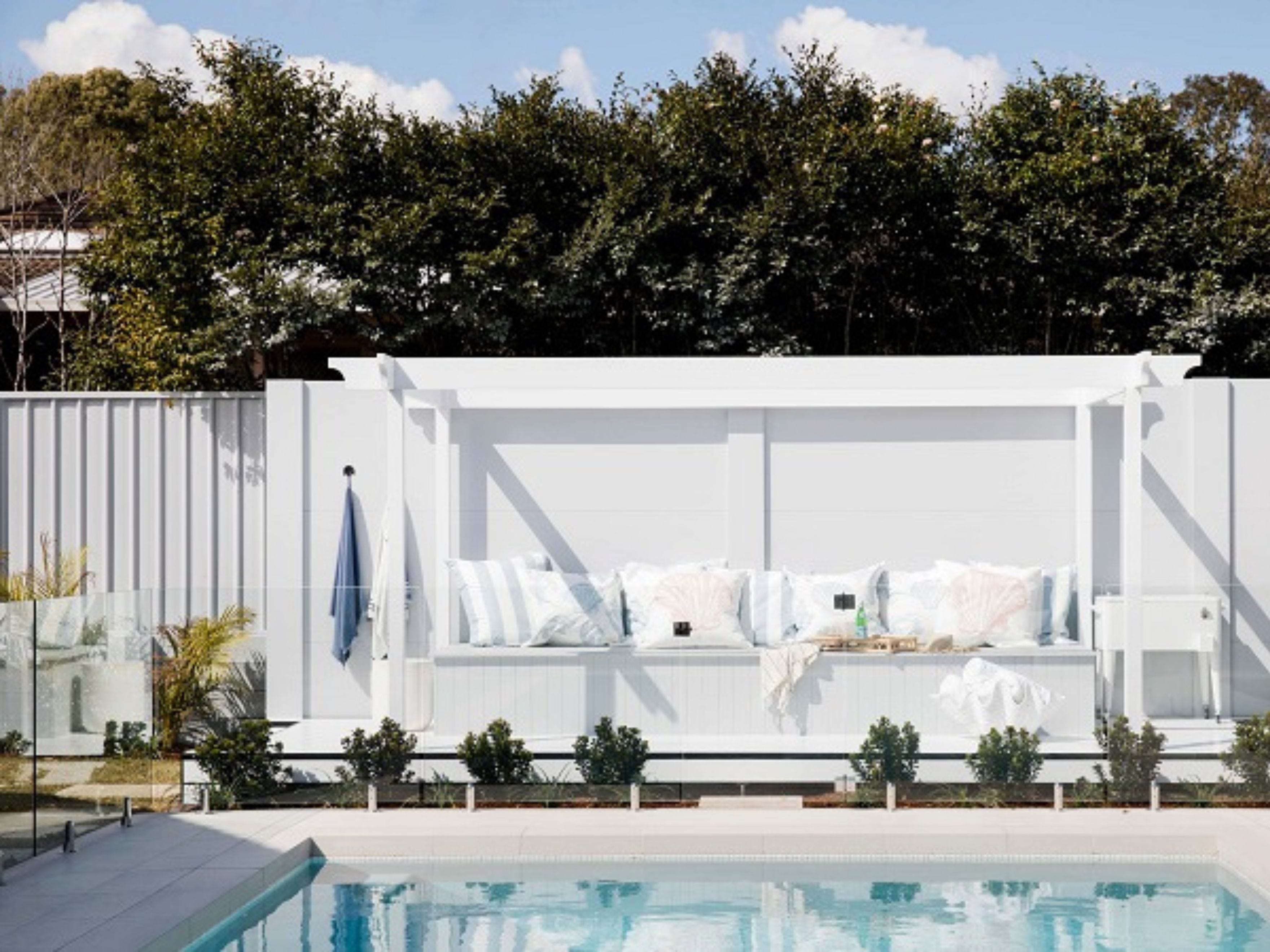
4. PVC fencing
Most commonly seen in white picket or semi-privacy styles, PVC fencing resists rot and termites while maintaining a clean appearance. PVC fencing can work well in certain applications, but homeowners seeking a premium architectural look often prefer more substantial alternatives. Additionally, its construction is less durable than masonry or composite options meaning a more temperamental product.
Pros of PVC fencing
- Low maintenance
- Resistant to termites and rot
- Doesn’t require painting
- Lightweight and relatively easy to install
Cons of PVC fencing
- Can crack, warp or become brittle in harsh weather
- Less rigid than masonry or modular systems
- Plastic appearance may not suit all homes
- Minimal acoustic performance
- Damages more easily than solid fencing systems
Which masonry fence alternative is best?
The right fencing solution ultimately depends on your priorities. If your focus is on achieving a high-end rendered appearance with strong acoustic performance and faster installation, ModularWalls offer many of the visual and functional benefits of masonry fencing, without the same level of construction complexity.
Before making a decision, consider:
- Your budget
- Desired appearance
- Installation access
- Noise reduction needs
- Maintenance expectations
- Local council requirements
- Long-term durability
Considering cost-effective masonry fence alternatives?
Modern alternatives like ModularWalls now allow homeowners to achieve a similar premium look with faster installation, reduced labour costs and less site disruption.
By understanding the strengths and limitations of each fencing option, you can choose a solution that suits both your home and your budget, while still maintaining a contemporary finish.